A Country in a Jam
28th September 2017
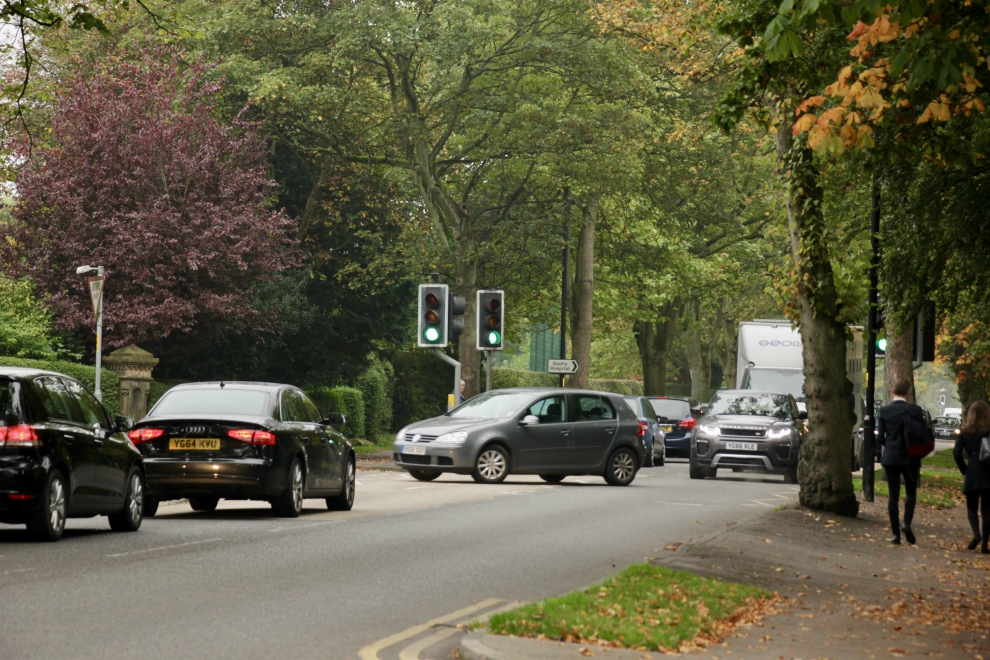
Traffic on Otley Road, Harrogate, by Hedgehog Cycling
In August 2017, the Local Government Association (LGA) produced a
report on congestion, titled A Country in a Jam: Tackling
Congestion in our Towns and Cities. The purpose of the report
is to set out how councils are dealing with congestion and how they
could do more.
A Country in a Jam: foreword
In the foreword, Councillor Martin Tett, Chairman of the LGA
Environment, Economy, Housing & Transport Board, sets out the
current position and future challenges. He notes:
- *traffic is a sign that a lot of people have jobs to go to, but
it is an inconvenience and can act as a drag on local growth
- *the DfT predicts traffic levels up to 55% higher by 2040, and
congestion up to 85% greater
- *congestion will cost the economy £307 billion between 2013 and
2030
- *4.9 days per person per year are wasted due to delays on the
strategic road network
- *traffic in a jam emits 4 times as much pollution as
free-flowing traffic; there are 40,000 premature deaths per year
due to air pollution
- *councils as local traffic authorities have a duty to secure
'the expeditious movement of traffic'
Councillor Tett writes, 'Some journeys will always need to be done
by car but our goal should be to shift journeys to other means, such
as onto public transport, or off the roads entirely. This will help
those that need to use the roads as well as those that have to live
with the consequences of congestion.'
'This report is being presented at the same time as the Government
has started drafting legislation on transitioning towards electric
and autonomous vehicles. It is not clear how this will impact the
transport networks of the future. Different outcomes are possible -
road capacity could increase as smart technology could make better
use of existing capacity, or it is also conceivable that a reduction
in the cost of travel could make car travel so cheap people do far
more whilst undermining the viability of public or other forms of
transport. What is clear is that we have a pressing problem on our
roads now, which require more immediate solutions.'
A Country in a Jam: nine innovative schemes
The report looks at nine innovative schemes by councils around the
country, to tackle congestion.
Those schemes include the workplace parking levy, which allows
transport authorities to impose a charge for every parking space
provided by an employer, with revenue raised spent on local
transport. This has been implemented in Nottingham, and it has
reduced the number of workplace parking spaces, while the revenue
from the levy has been spent on tram improvements. The number of car
miles is in decline.
Every full bus can take 75 cars off the road, but buses are
susceptible to congestion, and people are less willing to take the
bus if they think they will be stuck in traffic. Brighton has
developed an extensive network of bus lanes with priority, and
increased information for passengers. Reading has also invested in
making bus travel attractive.
Big data has the potential to make travel more efficient. In
Northamptonshire, the University has combined travel data from the
County Council, the University, the General Hospital, and two
private healthcare organisations, to see where efficiencies could be
made.
Staffordshire has led the way in coordinating roadworks, to boost
the number of joint street works by different utilities at the same
time. In Kent, there has been a trial scheme where utilities are
charged for the time and manner they work on the busiest sections of
the area's roads.
A Country in a Jam: active travel
One of the innovations identified by the report is active travel -
walking and cycling. It can reduce congestion, and there are
associated health benefits.
Bristol has some of the worst congestion of any English city -
residents lose 148 hours a year because of it. Cycling is being
prioritised there. Some of Bristol's ideas are:
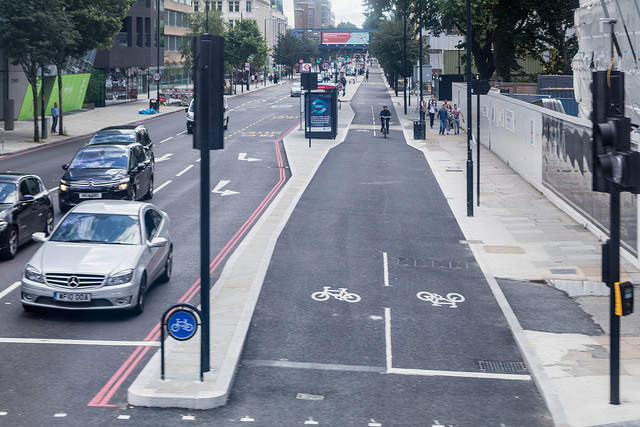
- *to deliver segregated not shared use cycle infrastructure
wherever possible
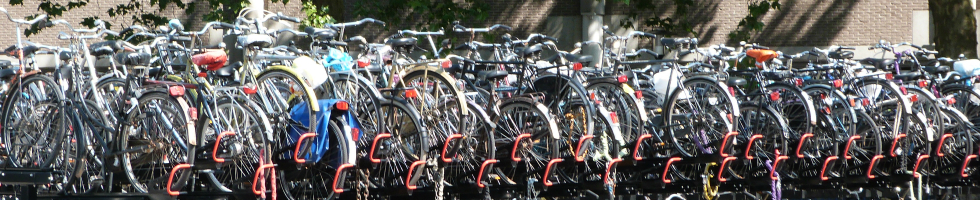
- *more cycling parking
- *to promote new infrastructure to employees, schools, and in new
residential developments
- *to provide loan bikes, cycle training, and route planning
- *to coordinate with the planning department to include cycling
infrastructure in developments
The number of cyclists in Bristol doubled between 2001 and 2011,
and the proportion of cycling journeys has increased by 25% in the
last eight years.
A Country in a Jam: how councils could do more
The LGA believes that a number of measures would help councils
tackle congestion more effectively. One is greater certainty and
influence over transport funding. Highways England and Network Rail
have 5-year funding programmes. The same should apply to local
authorities. Also, competitive bidding for funds from a number of
different funders should be eliminated.
The use of the workplace parking levy should not be subject to
approval by the Secretary of State for Transport; local authorities
throughout England should have the power to enforce 'moving traffic
offences', as London and local authorities in Wales currently do.
'Highways England should mitigate the impact of their road
improvement programme on local networks. Almost all road journeys
start and end on local road networks and if they cannot cope with
the increased capacity of the strategic road network all we are
doing by improving it is making it easier to get between traffic
jams...This could include Highways England funding park and ride
schemes or parkway stations. It could also mean funding for local
network improvements.'
Other powers the LGA would like local authorities to have are to
manage streetworks (without government permission), to combine
public sector journeys, to promote bus travel, and to introduce
Clean Air Zones.